
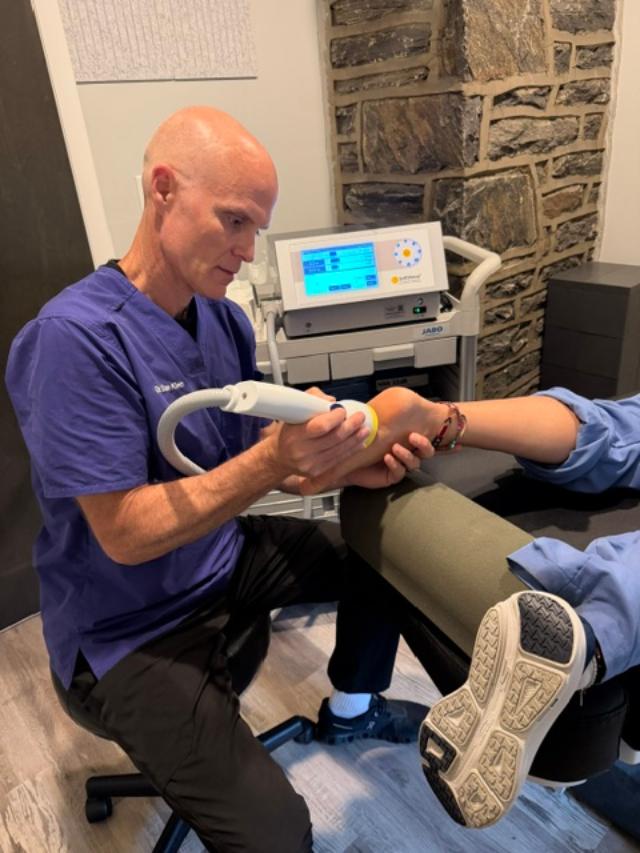
Can SoftWave Therapy Help Plantar Fasciitis?
If you’re struggling with heel pain that makes it difficult to take your first steps in the morning or stay on your feet throughout the day, SoftWave Therapy for plantar fasciitis may offer a non-surgical treatment option designed to reduce pain and support your body’s natural healing process. At Everybody’s Chiropractic Center in Upper Darby, PA, we provide personalized evaluations and conservative treatment plans to help patients return to work, sports, and everyday activities with less discomfort.
Many people with plantar fasciitis try stretching, shoe inserts, medications, or even injections before looking for other options. While these treatments may help some individuals, others continue to experience persistent heel pain. SoftWave Therapy is one of several conservative treatment options that may be incorporated into a personalized treatment plan before considering more invasive procedures.
What Is Plantar Fasciitis?
Plantar fasciitis is one of the most common causes of heel pain. It develops when the plantar fascia—a thick band of connective tissue that runs along the bottom of your foot from the heel to the toes—becomes irritated or overloaded.
Repeated stress can create tiny areas of tissue damage that lead to inflammation, pain, and stiffness. Many patients notice the pain is worst with their first few steps in the morning or after sitting for long periods.
Common symptoms include:
- Sharp pain under the heel
- Pain with the first steps in the morning
- Heel pain after prolonged standing
- Foot pain after exercise
- Tightness along the arch of the foot
- Pain that improves slightly with movement but returns later in the day
Without appropriate treatment, plantar fasciitis can become a chronic condition that affects walking, exercise, work, and everyday activities.
What Causes Plantar Fasciitis?
Several factors can increase the risk of developing plantar fasciitis, including:
- Prolonged standing or walking
- Running and other high-impact sports
- Flat feet or high arches
- Tight calf muscles
- Limited ankle mobility
- Improper footwear
- Weight gain
- Repetitive stress from work or daily activities
Because every patient is different, identifying the underlying cause is an important part of developing an effective treatment plan.
Looking for More Information?
Visit our pages on Back Pain, Neck Pain, Shoulder Pain, Knee Pain, Headaches, and SoftWave Therapy to learn more about the conditions we commonly evaluate and the conservative treatment options available at Everybody’s Chiropractic Center.
How Does SoftWave Therapy Work?
SoftWave Therapy uses patented acoustic wave technology to stimulate the body’s natural healing response. Rather than masking pain, the treatment is designed to promote circulation, activate healing cells, and encourage tissue repair in damaged areas of the plantar fascia.
The acoustic waves travel through the affected tissue and may help:
- Increase blood flow to the injured area
- Stimulate the body’s natural healing response
- Reduce inflammation
- Encourage the release of growth factors
- Support the repair of damaged tissue
- Improve mobility and function
Because SoftWave Therapy is non-invasive, there are no injections, incisions, or lengthy recovery periods. Most treatments take only a few minutes, allowing patients to return to their normal daily activities immediately afterward.
Benefits of SoftWave Therapy for Plantar Fasciitis
Patients seeking conservative treatment for plantar fasciitis often choose SoftWave Therapy because it may provide several potential benefits, including:
- Non-surgical treatment
- Drug-free pain management
- Reduced heel pain
- Improved walking comfort
- Increased mobility
- Support for the body’s natural healing process
- Little to no downtime
- Personalized treatment plans based on each patient’s condition
Many patients report improvement after several treatments, although every individual’s condition and response to care are different.
Who May Benefit from SoftWave Therapy for Plantar Fasciitis?
SoftWave Therapy may be appropriate for individuals experiencing:
- Chronic plantar fasciitis
- Heel pain that has not improved with stretching or rest
- Foot pain while walking or standing
- Pain during work or sports activities
- Recurring plantar fasciitis symptoms
- Individuals looking to avoid injections or surgery
Following a comprehensive examination, our doctors will determine whether SoftWave Therapy may be an appropriate part of your personalized treatment plan.
Research on SoftWave Therapy for Plantar Fasciitis
Extracorporeal shock wave therapy (ESWT), the technology upon which SoftWave Therapy is based, has been extensively studied for plantar fasciitis. Multiple clinical studies have demonstrated that shock wave therapy may help reduce pain and improve function in patients with chronic plantar fasciitis who have not responded to more conservative treatments.
Research continues to support shock wave therapy as a non-invasive treatment option for chronic heel pain, making it one of the most widely studied musculoskeletal conditions treated with acoustic wave technology. For readers interested in the scientific literature, a comprehensive review is available through the National Library of Medicine (PubMed Central).
Frequently Asked Questions About SoftWave Therapy for Plantar Fasciitis
Is SoftWave Therapy painful?
Most patients tolerate SoftWave Therapy very well. Although some areas of chronic inflammation may feel temporarily sensitive during treatment, sessions are generally brief and require no anesthesia or recovery time. Additionally, treatment intensity can be adjusted based on your comfort level.
How many SoftWave Therapy treatments will I need?
The number of treatments varies depending on how long you’ve had plantar fasciitis, the severity of your condition, and how your body responds to care. After a comprehensive evaluation, we’ll recommend a personalized treatment plan designed around your specific diagnosis and goals.
Can I walk after my treatment?
Yes. Most patients can return to their normal daily activities immediately after treatment. However, your doctor may recommend temporarily modifying certain activities depending on your condition and recovery goals.
Is surgery necessary for plantar fasciitis?
Most patients with plantar fasciitis improve with conservative treatment and never require surgery. Depending on your condition, treatment options may include stretching, footwear recommendations, chiropractic care, rehabilitation exercises, and SoftWave Therapy before considering more invasive procedures.
Is SoftWave Therapy covered by insurance?
Currently, SoftWave Therapy is generally not covered by most health insurance plans, including Medicare. Many patients choose SoftWave Therapy because they are looking for a non-surgical treatment option that may help reduce pain and improve function. Before beginning treatment, we’ll review your recommendations, answer your questions, and explain all costs.
Schedule Your Plantar Fasciitis Evaluation Today
If you’re experiencing persistent heel pain or plantar fasciitis, Everybody’s Chiropractic Center is here to help.
We’ll perform a comprehensive evaluation, explain the cause of your symptoms, and determine whether SoftWave Therapy for plantar fasciitis may be an appropriate part of your personalized treatment plan.
Everybody’s Chiropractic Center
115 E. Township Line Road
Upper Darby, PA 19082
Phone: (610) 789-1800
We proudly serve patients from Upper Darby, Havertown, Springfield, Broomall, Newtown Square, Drexel Hill, Clifton Heights, Lansdowne, Yeadon, Philadelphia, and communities throughout Delaware County.
Interested in learning more about SoftWave Therapy? Visit our comprehensive SoftWave Therapy page to discover how this advanced non-surgical treatment may be incorporated into personalized treatment plans for back pain, neck pain, shoulder pain, knee pain, arthritis, plantar fasciitis, work injuries, auto accident injuries, and many other musculoskeletal conditions.